Sing to the Lord a New Song
Why We Need New Music for Ancient Words
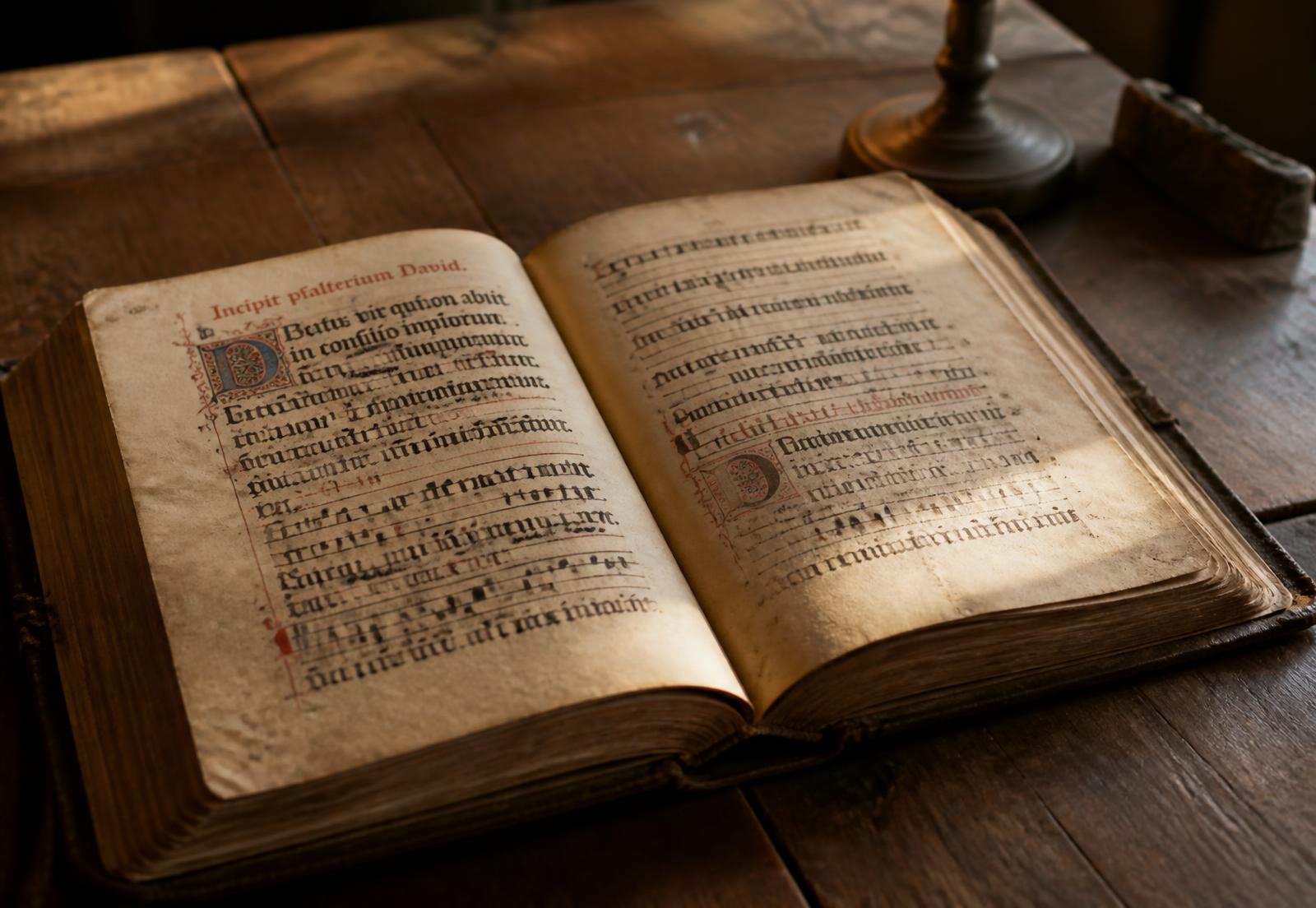
The Psalms were made to be sung. Their superscriptions speak about musicians, instruments, directors of music, and even particular tunes. The Psalms themselves repeatedly call the people of God to sing. If we want to recover the Psalms as prayers, then, we should also recover them as songs.
That raises an obvious question. What should the Psalms sound like?
We no longer have the music that Israel used to sing them. We have the inspired words, but the music is different. The words of the Psalms have been given to the church as Scripture. Their musical settings have always belonged to the creative work of people who sing them. Every generation that receives these ancient words therefore has the opportunity to sing them again.
Psalm 96 begins, “Sing to the LORD a new song; sing to the LORD, all the earth.” Perhaps there is an important principle here. The words of the Psalms are ancient and enduring, but every generation and culture can give those words new musical expression.
Ancient Words, New Songs
Throughout the history of the church, Christians have created music for the Psalms. Some of these settings are beautiful, and many have served the church remarkably well. One of the great examples is the Genevan Psalter produced during the Reformation. The Reformers wanted ordinary Christians to sing the Psalms, and so they gave the people musical settings that allowed them to do it.
There is much to admire in that project. Yet simply returning to the music of the Genevan Psalter is unlikely to recover Psalm singing for most Christians today. Sixteenth-century Genevan music belonged to a particular time and culture. It was music that people of that world could learn and sing together. It is not the musical language of most people living in the twenty-first century.
Perhaps the best way to honor what those Christians did is not simply to reproduce their music. It is to do for our generation what they did for theirs.
Every culture has a musical language. Musical styles change, instruments change, rhythms change, and the sounds that people naturally recognize as music change. None of these forms is inspired. They are simply vessels that carry words.
The challenge for every generation is therefore the same: take the ancient words God has given us and find faithful ways to sing them in the musical language of the people who are alive now.
Let the Music Serve the Words
Earlier generations faced a significant problem when they tried to sing the Psalms. Much of the music available to them required lyrics with a regular poetic meter. The biblical text did not fit easily into those musical forms, so songwriters created metrical versions of the Psalms. They rearranged and paraphrased the biblical text so that it could be sung.
These metrical Psalms have served generations of Christians well, and some are beautiful works in their own right. Yet there is an unavoidable tradeoff. Once the Psalm is rewritten to fit a particular meter, the words being sung are no longer precisely the words a person encounters when opening a Bible. Sometimes the relationship is obvious. At other times, the paraphrase can be different enough that someone familiar with the song may not immediately recognize the biblical text behind it.
Modern music gives us considerably more rhythmic freedom. We are not restricted to common meter or to a fixed number of syllables in every line. That opens an important possibility: rather than changing the words to fit the music, we can try to make the music fit the words.
This has become one of the central convictions behind the South Florida Psalter. We use the words of a widely recognized contemporary Bible translation, the NIV, and set those words to music exactly as they appear.
The goal is simple. Someone who learns a Psalm by singing it should later open a Bible, encounter those same words, and recognize them immediately. In the same way, someone who has read a Psalm many times should hear the song and think, “I know these words.”
The music serves the words, and the words of Scripture begin to take up residence in our memory.
Sing the Psalm, Not Just a Verse
There has been a welcome renewed interest in the Psalms among contemporary Christian songwriters. Many modern worship songs quote a verse from a Psalm or use a Psalm as the inspiration for a new song. This is good. The Psalms should shape the language and imagination of Christian worship.
Yet there is a difference between writing a song inspired by a Psalm and singing the Psalm itself.
A songwriter may begin with a beautiful verse from Psalm 23, Psalm 46, or Psalm 103 and then write new lyrics that develop its theme. The result may be an excellent Christian song. It may even help people understand something important in the Psalm. Yet it is still something different from singing Psalm 23, Psalm 46, or Psalm 103.
This distinction matters because the Psalms often take us places we would not choose to go. A Psalm may move from praise to lament, from confidence to confusion, or from personal suffering to the judgment of the nations. It may include words about enemies, death, injustice, anger, or waiting for God. When we select a favorite verse and build a new song around it, we naturally select the parts that seem most useful or singable to us.
When we sing the whole Psalm, Scripture sets the agenda.
That is one of the most important convictions behind the South Florida Psalter. The question is not simply, “How can this Psalm inspire a worship song?” The question is, “How can we help the church sing this Psalm?”
That means allowing Psalm 77 to take us through the dark night of lament before remembering the mighty acts of God. It means allowing Psalm 96 to move from singing a new song to declaring God’s glory among the nations and finally to all creation rejoicing because the Lord comes to judge the earth. The shape of the song should come from the shape of the Psalm.
We want to sing the whole thing.
Music That Sounds Like Music
Making the music serve the words does not mean that the music should be merely functional. If music helps words enter our memory and gives emotional expression to prayer, then the quality of the music matters.
A lament should be allowed to sound like lament. Joy should sound joyful. A song of confidence should have confidence. The music can help us feel the movement already present in the words.
It should also sound like music that people in our own time might actually want to hear and sing. This does not mean chasing whatever happens to be popular at the moment, nor does it mean that every Psalm must sound the same. It means taking seriously the musical language of the culture in which God has placed us.
The South Florida Psalter therefore does not have one musical style. Different Psalms call for different sounds. The goal is not to create a particular style of Psalm music. The goal is to create music that serves each Psalm faithfully, memorably, and beautifully.
The Same Psalms in Every Generation
There is something wonderful about the fact that Christians have been solving this problem for centuries. The Psalms remain the same while the music continually changes.
The church in Geneva sang the Psalms in the musical language of Geneva. Christians in other centuries and cultures have done the same. Around the world today, the Psalms are being sung in languages and musical forms that David could never have imagined.
This is not a problem to overcome. In many ways, it is exactly what we should expect from a book that says, “Sing to the LORD a new song; sing to the LORD, all the earth.”
The South Florida Psalter is one small attempt to participate in that continuing work. We are not trying to write better words than the Psalms. We are not trying to take a verse from a Psalm and turn it into something else. We are trying to take the words God has already given us and give them music that people in our time can remember, enjoy, and sing.
The words are ancient. The songs can be new.
And perhaps, as those ancient words find new melodies, another generation will learn to carry the Psalms in their hearts and on their lips.
“The words are ancient. The songs can be new.”
Send this to someone who needs the Psalms this week.

- Part 1 of 2Music Is the Native Habitat of Prayer
- Part 2 of 2Sing to the Lord a New Song You are here
Hear the Psalms sung
Ancient words. New songs. Begin with any Psalm and stay for a lifetime.